So I Guess We're Reverse-Engineering Everything Now...

A little while ago, this reverse-engineering skill went viral for being able to do things like decompile retro video games so you can play them on your PC and get rid of the junk on Android TV operating systems.
It's interesting to me that LLMs are so good at reverse engineering because they're so good at doing boring repetitive tasks that humans don't want to do, like reading memory dumps and creating art. The LLM will just keep attacking the problem until it figures out what the obfuscated, unannotated code does.
While the skill seems like a glorified way to tell your harness to install Ghidra, I've been trying it out when it makes sense to.
Hung @ Home
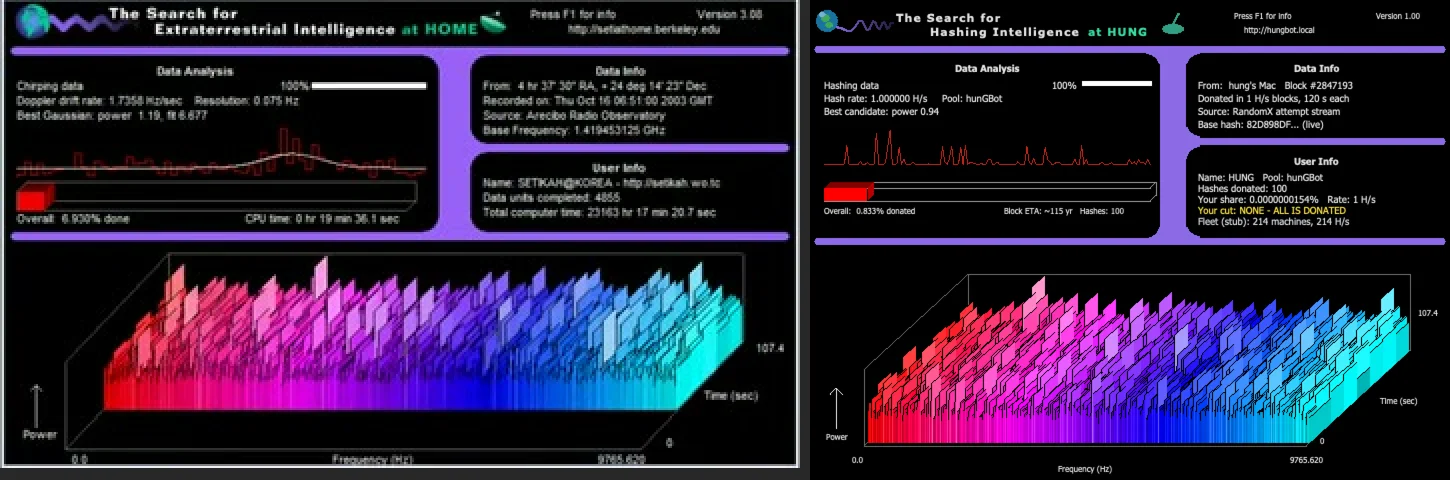
I've been working on a suite of screensavers in my spare time, which has been a really fun project. I'll probably make a dedicated post about that later at some point. Basically, I'm trying to make a bunch of Hung Truong themed screensavers that capture the essence of old screensavers from the 90s. One of my ideas for a screensaver was to recreate the UI of the old Seti at Home project. If you weren't a nerd in the 90s, Seti at Home was this thing where you would download radio telescope data from the internet, then process it on your computer, then send it back to scientists so that they can tell you if you found aliens. We had it installed on our computer though sadly we didn't find any aliens.
Anyway, I tried having my local LLM, Qwen3.8-Flash-Next, just make a lookalike based on a Youtube video that someone posted of the original version running. The results were pretty terrible. Even though I told it to make a perfect copy, no mistakes, it really veered off course. I couldn't get it to salvage the interface, so I opened up Claude Code and had it download the original screensaver. I had it reverse-engineer the actual logic for creating the iconic bars and colors for the interface. While the old version helped scientists find aliens, my version helps me mine cryptocurrency on other people's computers.
You Wouldn't Download a Dog!
I also recently acquired an old school Sony Aibo (that's another blog post I'll write) and have been playing around with it. Today I was playing with the "performance" mode, which basically lets you run different predefined actions on the robot. Stuff like making the dog bark or lift its leg like it's peeing. I noticed that in the manual there's a way to play user-defined animations, which you would create using the Aibo Performer application on Windows. I downloaded the software from the Internet Archive (I love that site) and installed it on a Windows VM.
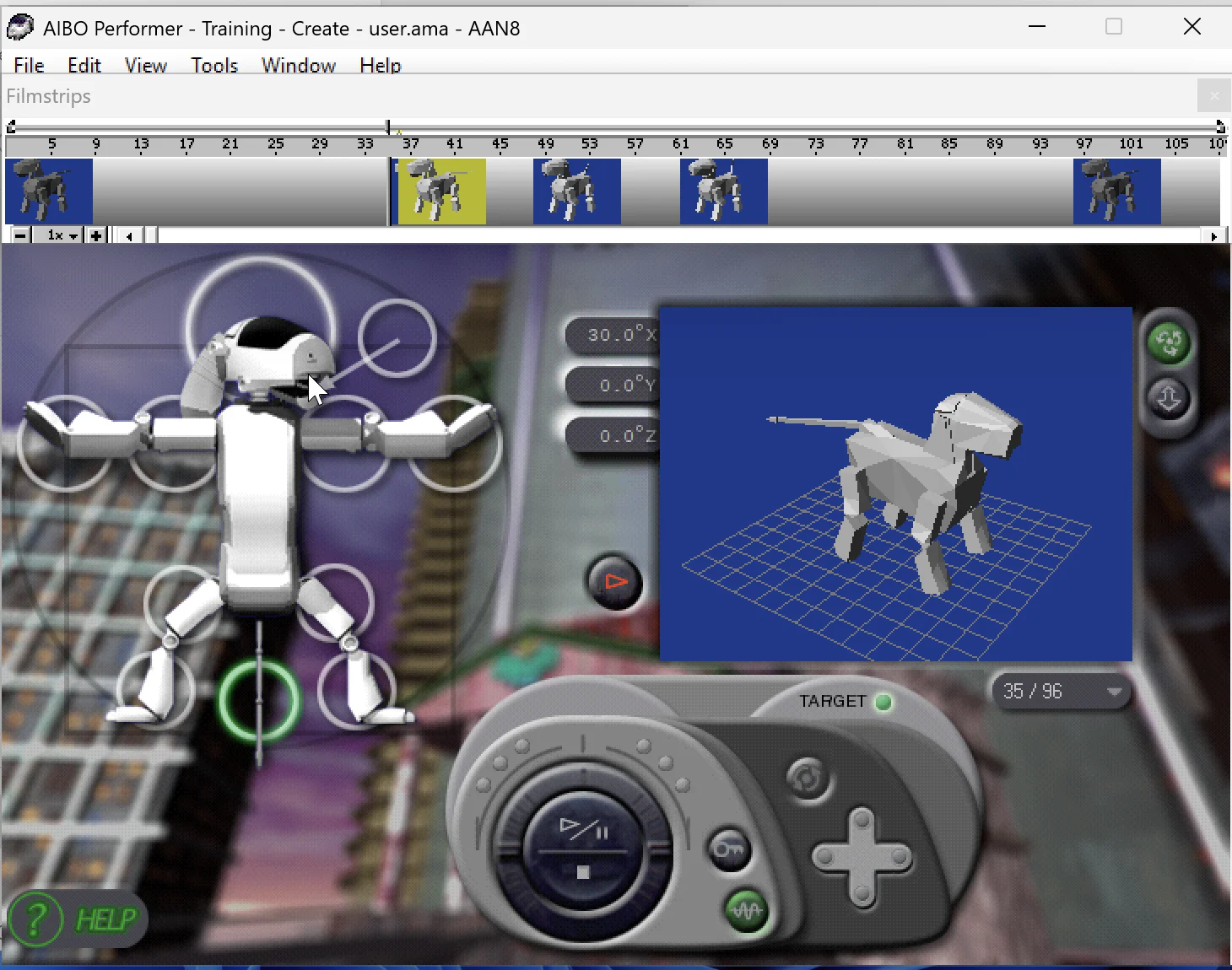
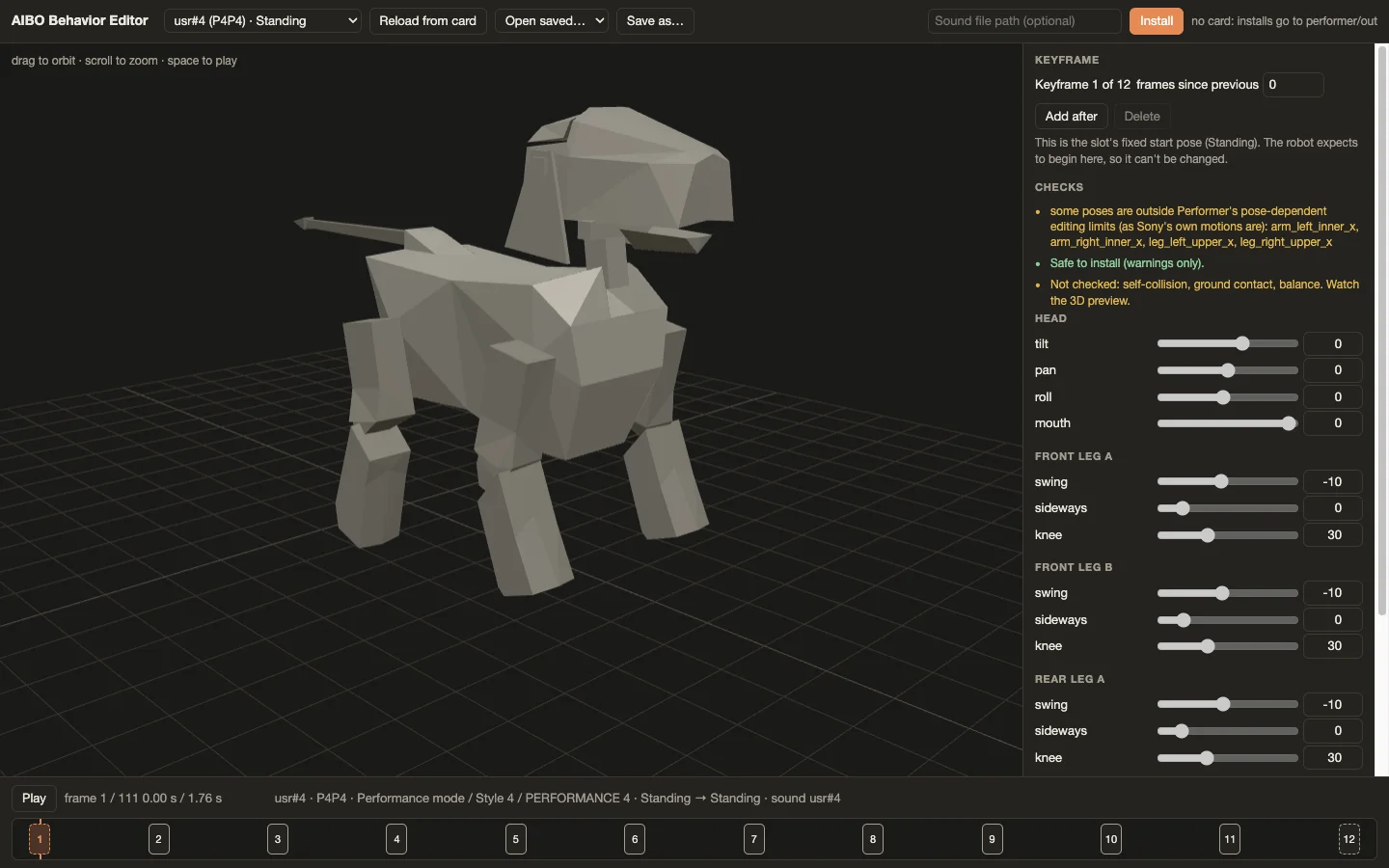
The software lets you create brand new actions for your dog, but the interface is terrible, even for late 90s standards. I figured it would be fun to make some brand new poses for my dog, but not with this crap software, so I asked Claude Code to reverse engineer it. I started with Sonnet, and as soon as my weekly usage reset, I started using Fable 5.2. It essentially re-did the whole Windows app as a web app, reverse engineering the file format and the editor, along with all of the rules for moving the limbs (so your dog doesn't punch itself in the face). I haven't tried it yet since it was working while I was writing the beginning of this blog post, but I'm looking forward to making my dog do all kinds of weird stuff.
Reverse Engineer Anything (as long as Claude lets you)
I read a few stories about how Claude has stopped being so cool about reverse engineering stuff. Like it won't do games now? That's probably a good reason to keep developing local LLMs, so the man can't tell you what to do. I don't see myself reverse engineering everything for no reason, but I do see it as just another tool that can lead to some cool stuff. Just like most things, being aware of it as a possibility is a nice thing to have. And the more that I try it, the easier it is to see where and how it can be useful.

Leave a Comment
Comments are moderated and won't appear immediately after submission.