-
July 16, 2009
To Google Voice or Not To Google Voice?

I recently got a new iPhone 3GS (32GB!) and with it a new phone number. I've had a Google Voice number from way back when it was called GrandCentral. I never used it because I found the integration a bit lacking. As I now must inform people of my new number, I was thinking about giving them the Google Voice one instead of the “real” one. This is also as Google Voice is getting considerable buzz since it's finally giving away invites after closing off the service quite some time ago.
Here are some pros and cons to either choice.
Pros:
- I don't have to ever tell people I'm changing my phone number again in the future.
- Neat voicemail transcripting.
- Routing calls from phone to phone (I might want it to go to my work phone at certain times, mobile at other times)
- Googliness?
Cons:
- The voicemail system won't be integrated into my iPhone
- There isn't an official iPhone app for Google Voice yet.
- SMS doesn't work with short codes (40404 for Twitter)
- Calls made through voice won't count as “mobile-to-mobile.”
- Other integration issues.
- Possible dependency issues.
For me, Google Voice is pretty cool, but not cool enough to rely on because of its crappy integration. By crappy integration, I mean that Google Voice just simply cannot expect to integrate itself well into other companies' phone systems. There are a number of examples of this. One is that if I want to send a text to someone, I need to use Google Voice to do it instead of my phone. This adds a layer of obfuscation to the process. Here's what the help doc on Google Voice says:
Call, Voicemail and SMS Issues: Receiving SMS on phone from 406 numbers
When you send an SMS through Google Voice, the SMS appears to be sent from your Google number. When someone sends an SMS to your Google number, and it's forwarded to your mobile phone, it won't appear as from the sender's actual number (e.g., the SMS may appear from 1-406-xxx-xxxx). This is so that when you reply to the 1-406-xxx-xxxx number from your phone, the SMS you send appears to be sent from your Google number and will be saved in your Google Voice inbox.
Holy crap, that's just confusing! Another example of Google Voice not playing well with existing companies' systems would be mobile-to-mobile calls. If I call my sister using Google Voice, the call probably won't count as “free” since it's going to Google instead of directly to her phone number. Though apparently if you add the Google Voice number to T-Mobile's “Faves” you could get some pretty interesting free call results…
Another peeve I have about Google Voice is that they've decided to make the mobile apps for Blackberry and Android thus far. I wonder if this is because the iPhone is a competitor to their own Android platform or if they just decided it would be easier, or for any other reason. It kind of shows a “Microsoft Moment” for lack of better term for Google; writing software to serve their own ends versus writing software to reach their customers on the platform they use. I don't have any numbers to back this up though (are there more Android+Blackberry users than iPhone?), so at this point I'm just complaining because I have an iPhone and it doesn't have an app.
For now I will ditch Google Voice (or just not use it) until it can be integrated effortlessly into my own mobile phone's system. The whole point of using Google Voice is to simplify things. I can see it'll be a really complicated road ahead for Google to actually implement this, but I hope they do. It almost surely means they'll need to work with phone companies directly. This will probably take time and lots of money. I'll just stick with my own phone's capabilities until then.
-
July 16, 2009
Segway Tour Impressions
[flv:/blog/video/Segway.mp4 460 360]
This weekend, I was in Gettysburg, PA visiting a pal. Besides enjoying history, there are many other things to do. One of these things is riding a Segway around the historic battlegrounds. I guess that counts as enjoying history as well…
Emily, Katie and I set up an appointment at SegTours of Gettysburg for a “Segway Experience.” This did not include an actual tour. While we were getting ready for basic training, the lady asked us if we'd mind going on the real tour (she claimed she wanted to get more practice doing the tour). We were really happy to get a free upgrade since the reason for choosing the “experience” was to lessen the burden on our pocketbooks.
Basic training consists of Segwaying around in a parking lot until you get the hang of it. There are also cones involved. I got going pretty quickly. It probably has to do with the fact that I do Wii Fit a lot and thus am quite aware of my balance most of the time. The Segway accelerates backward and forward based on how much weight you put forward or backward. Staying stationary is kind of a challenge as you must keep your balance completely in the center. The video above is of basic training. There was an older couple who also did the training but didn't feel confident enough to go on the tour. They were nice though; the older gentleman was smoking a pipe on his Segway.
The actual tour had us going through the Eastern battlefield. I must say, it was really fun going through alleyways and roads on the way to the actual battlefield. We also went through a hotel parking lot and passed a swimming pool. It's really fun just effortlessly accelerating around while everyone else needs to walk up a hill. While the others complained about the Segway being a lot of work to ride, I thought it was pretty decent; just like standing.
What did I learn on my tour? That I want a Segway. I should really just get something more reasonable like a bike (which I think would provide the same kind of exhilaration, but with pedaling). Segway-riding is really fun and I hope to do it again some time. Oh, and history is also good, I guess.
-
July 11, 2009
Found Audio #01: Working Undercover For the Man
Note: I lost the MP3!
[Found Audio #01: Working Undercover For the Man](http://www.hung-truong.com/blog/audio/found/Found Audio 01.mp3)
Here's the first installment of my Found Audio series of “podcasts.” The start of my tape (at least, one side of it) featured a recorded session of Dial-a-song, They Might Be Giants' phone song service. You call the number and they play you a song. Back when I recorded this, long distance phone calls were not free. Unless, of course, you used Dialpad, the PC to Phone service that worked over 56kbps connections circa 2000! Due to the transmission of the song from NY to phone to internet to my speakers to my portable tape recorder to my Macbook Pro, the sound quality is not the best.
This was a pretty popular dial-a-song, but not their best. I think I had recorded another one, possibly “Hovering Sombrero.”
-
July 06, 2009
Found Audio: An Intro
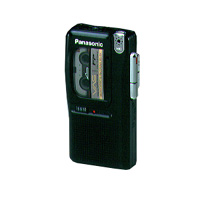
While rummaging through my old room, I found an old cassette voice recorder thing. Sort of like the thing that the kid in Home Alone uses to make a hotel reservation. Except it was for actual voice recording. I used it a bit in high school for various purposes. The tape that was left in the recorder was recorded somewhere between my sophomore and senior years in high school. I'd probably say it was later, either junior or senior year.
The stuff on the tape is a pretty eclectic mix (I haven't listened to everything yet) of music and recorded conversations. I'm thinking of recording bits and pieces and maybe making it into a mini-podcast series. It'll be pretty esoteric; I have a feeling no one but me and a few of my high school friends will actually find it interesting. But so is a lot of the content on my blog anyway! Once I get home I'll start digitizing and organizing the stuff on the tape. I wish I could find the many other tapes of stuff. They're probably sitting in my room somewhere…
-
June 26, 2009
Random Michael Jackson Flash Vids
What the hey!? Michael Jackson died today (yesterday)! Well that's kind of a bummer. I mostly spent most of the evening listening to his music (I went to the library and grabbed History) and watching music videos on YouTube.
Also, I just remembered about the random Super Mario Bros. sprite animations that some Japanese person (sikamako) made using graphics from the old Genesis game, Moonwalker! I had only previously linked to one. So I thought that in tribute of MJ, I'd link to all of them. They're all really weird:
Super Michael Bros.
I think this is the original one. I don't remember where I got it. Seems sort of normal enough. Just MJ running through a few Mario stages.
Michael Quest
Michael Quest is a little weirder. Basically he comes in and pwns a bunch of video games. Then some red ninjas come in? Then MJ is revived by Luigi? And he turns into the metal thing from Moonwalker. Yeah, this really makes no sense. Just watch it.
Michael Fantasy
It actually gets weirder. There's a flashback to Michael Quest (of course). Then the princess rides a gigantic Zangief from SFII to destroy the earth. This is foreshadowed before it actually happens, so then a bunch of random video game characters try and stop it. And of course, Michael Jackson saves the day again.
Michael Forever
I believe this is the last one. I think Michael finds some Dragon Balls, revives some characters, then has to stop Princess Peach again, this time riding a giant E. Honda… There's a lot of Japanese pop cultural references (like Doraemon, Dragon Ball, etc) and I probably don't understand all of them. Suffice it to say that MJ is still a badass in this one. Crisis averted.